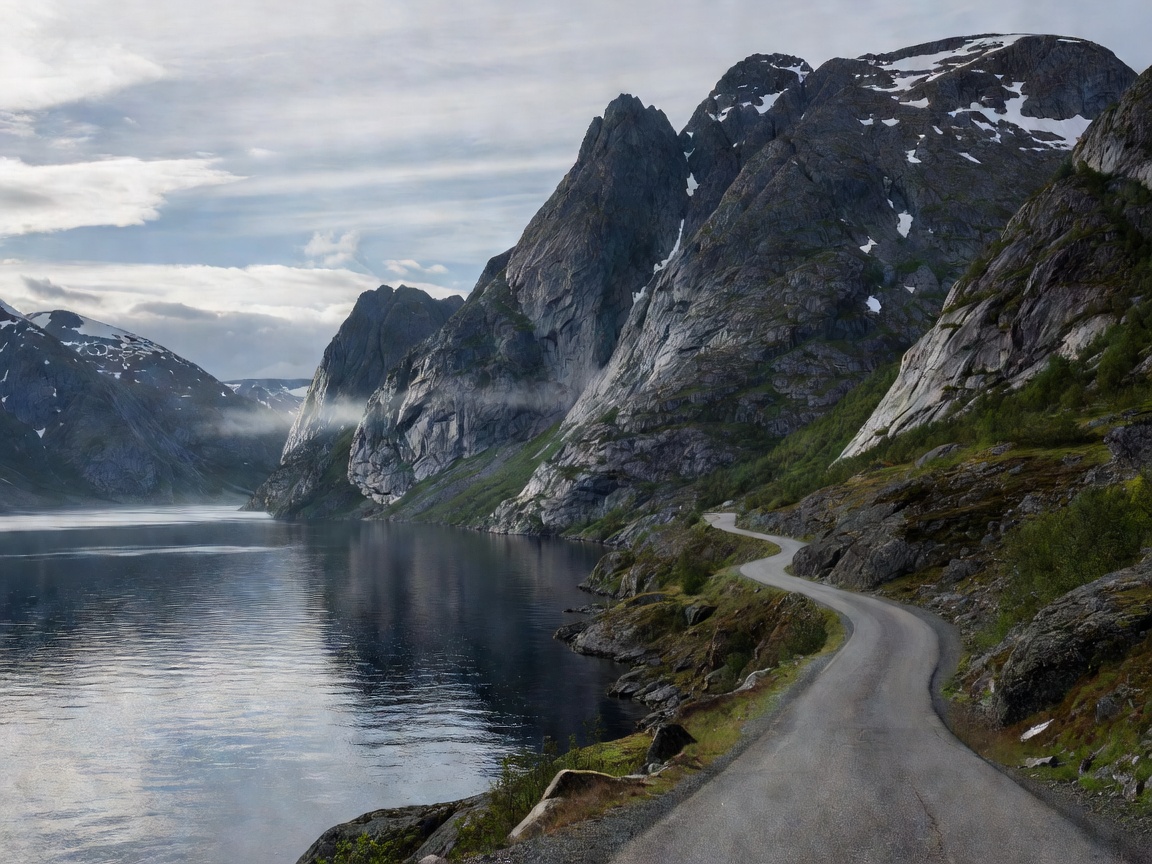
Choose a region before adding stops
Begin with the type of landscape and trip pace you want. A narrow fjord setting, a broad branching system and a settled shoreline create different routes and daily rhythms. Choose one region first, then map the arrival point, accommodation and activities. A long list of distant places can look efficient on a screen but become tiring when each transfer requires a road journey, ferry or connection.
For a short trip, a single well-positioned base can reduce packing and travel overhead. A longer itinerary can combine destinations, but each move should earn its place. Consider how much time will be spent reaching the next stop, and whether luggage, check-in times and transport changes make the transition workable.
Road travel and rental vehicles
A rental vehicle offers flexibility for reaching dispersed accommodation and stopping where permitted. It also places responsibility on the driver for route planning, parking, fuel or charging, and adapting to changing road conditions. Read the rental terms and vehicle requirements. Check current official road information before departure and again when conditions may have changed.
Road distances can understate travel time in mountainous terrain. Narrow roads, winding sections, tunnels, weather and ferry connections influence the journey. Plan a conservative day rather than estimating from straight-line distance. Identify fuel, charging or rest options from current sources, especially when travelling away from larger settlements.
Check property access in detail. Ask whether the final approach is paved, steep, gated or shared; where to unload luggage; and whether parking is on site. For a remote cabin, clarify arrival instructions and what is available if the planned arrival is delayed. Do not assume a map pin represents the entrance.
Ferries and public transport
Ferries may form part of a road journey or provide a passenger connection. A crossing can affect departure timing, transfers and the amount of time available for a connection. Consult the current operator for schedules, ticketing requirements and service updates. Do not rely on an old itinerary, cached search result or an assumed frequency.
Public transport can work well on selected corridors, but the final leg to accommodation may need a taxi, local transfer, walk or pre-arranged connection. Confirm whether services run on the relevant day and season. Check luggage rules and transfer distances. If your arrival is late, make sure the accommodation can receive you and that onward transport is available.
Build a connection buffer. A missed ferry or delayed service can affect more than one segment, particularly in a multi-stop itinerary. Avoid planning the last transfer of the day with no alternative. Keep contact details and accommodation instructions accessible offline where possible.
Luggage, access and mobility
Match luggage to the transport chain. Large cases can be difficult to move across terminals, small vehicles, steep paths or multiple connections. Ask accommodation about parking distance, steps, lifts, door widths and the route from drop-off to the room. A property described as accessible should still be checked against the specific needs of each traveller.
Consider terrain on the property itself. A hillside setting can involve stairs or uneven paths, while a waterfront location may have gravel or sloped access. Confirm bathroom layout, threshold details and whether assistance is available. For outdoor plans, check route surfaces, gradients and rest opportunities with relevant local sources.
Decide how long to stay
Trip duration should reflect transfer time as much as sightseeing. A one-night stop can be practical when it lies on a natural route, but short stays add packing and arrival tasks. Two or more nights in one base may provide a calmer pace and allow flexibility if weather changes. There is no universal ideal; compare the time spent in transit with the time you want at the destination.
When combining fjord regions, plan each leg as a separate journey. Confirm travel modes, likely transfer points and the final approach. Keep an overnight buffer where a missed connection would make the next leg difficult. Avoid treating geographical closeness as proof of simple access.
Seasonal planning and weather awareness
Season affects daylight, road conditions, service schedules and the kinds of outdoor plans that are practical. Check current forecasts and official road or transport updates close to travel. Keep plans flexible and choose accommodation with useful indoor comfort. Pack layers, rain protection and footwear suited to the activities and surfaces involved.
Do not build an itinerary around a precise weather expectation. Plan alternatives that can be done near the base or indoors. For remote properties, ask how arrival works if conditions change and what the cancellation or amendment terms say. Those policies are property-specific and should be read before booking.
Budget categories to account for
Build a budget by category rather than relying on a single headline figure. Include accommodation, meals, vehicle hire or public transport, ferries, fuel or charging, parking, activities, equipment and contingency. Consider whether a stay includes kitchen access or requires dining away from the property. Check current prices directly with relevant providers; this guide does not quote rates.
Good for
Use this planning sequence when creating a route, choosing between public transport and a vehicle, or checking whether your accommodation is practical to reach.
What to know
Schedules, road conditions, ticket prices, property access and local services change. Verify each with current operators and official sources close to travel.