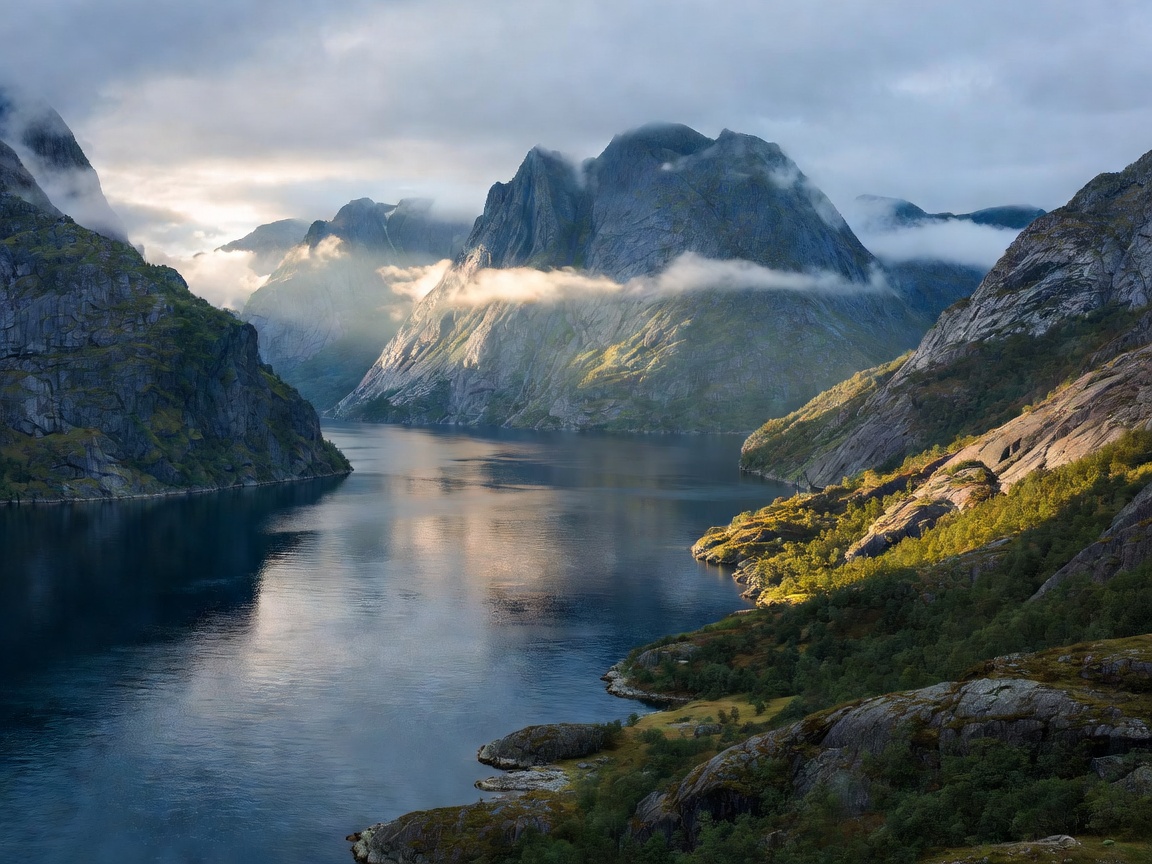
Winter: shorter days and a stronger indoor role
Winter gives fjord landscapes a different visual weight. Snow may cover high ground, while lower elevations can remain wet, bare or changeable. Daylight is shorter than in summer, so plan driving and outdoor activities around available light. Do not assume snow conditions, clear skies or a particular level of cold; local weather varies with elevation, coast and date.
Choose accommodation for the hours spent indoors as well as the outlook. Check heating, drying space, lighting, storage for layers and the route from arrival point to room. A sheltered entrance and a comfortable shared space can make a meaningful difference after a wet or cold day. Confirm whether local services and property facilities operate during your intended dates.
Pack layers, waterproof outerwear, warm accessories and footwear suited to slippery or uneven surfaces. If driving, check current road and vehicle requirements with the relevant sources. Keep the itinerary adaptable. A quiet base and a shorter daily plan can be more practical than multiple long transfers in limited daylight.
Spring: transition rather than a fixed scene
Spring is a period of change. Snow may remain at higher elevations while lower slopes begin to green. Water levels, vegetation and daylight shift through the season, and conditions can vary between inner and outer fjord areas. Avoid treating “spring” as a single predictable landscape or assuming all local routes and services follow the same calendar.
For packing, combine layers that can be adjusted throughout the day with rain protection and shoes suitable for mixed ground. Check whether your planned walks, viewpoints or transport links are seasonal. If the trip includes higher terrain, verify the access information for the specific route rather than relying on conditions at the shoreline.
Spring can reward a flexible pace. Keep an indoor alternative for days when wind, rain or low cloud changes the plan. When choosing accommodation, look for a comfortable room, useful drying facilities and clear arrival instructions. Confirm meal arrangements in advance where fewer nearby options are available.
Summer: long daylight, active itineraries
Summer brings longer daylight and more scope to spread activity across the day. The landscape is generally greener, and many visitors use the season for walking, boating or road journeys. Those activities depend on local access, provider schedules and conditions, none of which should be assumed from the season alone. Confirm details directly for the date and location.
Long daylight can encourage over-planning. Build in rest, travel time and a realistic return to the accommodation. In popular areas, the route, parking and local services may be busier than expected, but patterns differ by place and date. Check the property’s position in relation to your planned activities before selecting a room or base.
Pack rain protection even when the forecast looks settled, plus comfortable walking footwear and clothing that can adapt to temperature changes. Consider blackout curtains or a sleep mask if light affects rest. A terrace can be useful, but shade and wind shelter may matter as much as the view.
Autumn: colour, rain and shifting light
Autumn brings changing foliage and a lower angle of light. The landscape can shift quickly from bright colour to mist, rain or darker slopes. The season offers a quieter, more atmospheric setting for some travellers, but daylight reduces and services or activities may follow seasonal schedules. Verify those details instead of inferring them from photographs or old listings.
Pack waterproof layers, shoes with dependable grip and warm mid-layers. Keep a little flexibility between outdoor plans and transfers. A self-contained room or a property with comfortable shared indoor areas can make the stay less dependent on clear weather. Confirm access after dark, especially if the route includes a long drive or a final walk.
Compare more than temperature
Season selection should account for daylight, landscape appearance, activity priorities, transport options and your tolerance for changing conditions. A summer trip may support longer days but require a busy itinerary to be adjusted. Winter may suit a slower stay with strong indoor comfort. Spring and autumn reward flexible planning and careful checks on local operations.
Ask the same questions for any season: what will be open, what is the final approach, how much daylight is useful for driving, and what can be done if outdoor plans change? Keep current information separate from general seasonal expectations. Weather forecasts, road notices, ferry schedules and property policies should be checked close to travel.
Good for
Use this comparison when deciding when to travel, choosing what to pack, or assessing whether a property supports your preferred balance of outdoor time and indoor comfort.
What to know
This guide describes broad seasonal considerations, not forecasts or live operating information. Conditions and services vary by location and date.